Monday, February 21, 2011

All hail the Queen of Soul

Steely Dan's hit "Hey Nineteen" proclaims that 'hard times have befallen the Soul Survivors. The lyric appears somewhat prophetic as Queen of Soul Aretha Franklin recuperates from surgery for pancreatic cancer. The producers of this year's Grammy's awards show paid honored to Franklin with a "get well card" featuring musical tributes by Yolanda Adams, Christine Aguillera, Jennifer Hudson, Martina McBride and Florence Welch.

The irrepressible Franklin appeared in a video in which she promised to attend next year's Grammy awards.

It's easy to understand the music world's respect and admiration for the woman dubbed the "Queen of Soul". Franklin's timely rise in the industry coincided with the feminist and Civil Rights movements.

Born in a two-bedroom house in Memphis, Franklin's family moved to Buffalo and, later, Detroit. Franklin's mother died when the singer was 10; she was raised primarily by her grandmother. Young Aretha learned to play the piano and sang at the New Bethel Baptist Church where he father worked as a pastor.

Franklin signed a contract with Columbia Record in 1960; But the recording company - which built a reputation with classical music titans (New York Philharmonic Orchestra and Leonard Bernstein, Philadelphia Philharmonic and Eugene Ormandy), soloists (Rosemary Clooney, Frankie Laine and Tony Bennett) and folk performers (Bob Dylan, Peter Paul and Mary, New Christy Minstrels) lacked an appreciation of their artist's talents. Franklin scored Rhythm and Blues (R&B) hits "Operation Heartbreak" and "It Won't Be Long". But the label relegated her to covering standards ("Rock-A-Bye Your Baby With a Dixie Melody") and covers of pop tunes like "The Shoop Shoop Song (It's In His Kiss)" and "Mockingbird". Franklin and Columbia parted ways in 1966.

In a career game changer, Franklin signed with the independent label, Atlantic Records. Unlike the conventional Columbia label, Atlanta focused on R&B, soul and jazz. The label's stable of talent included Otis Redding, Wilson Pickett, Percy Sledge, Brook Benton and Solomon Burke. In 1967, Franklin enjoyed an incredible string of American classics: "I Never Loved a Man (The Way I Love You)", "Do Right Woman", "Chain of Fools" and "You Make Me Feel (Like a Natural Woman)". In a year of Top-40 female artists that featured Lulu ("To Sir With Love"), Petula Clark ("This Is My Song", "Don't Sleep in the Subway") and the Supremes ("Love Is Here and Now You're Gone", "The Happening" and "Reflections"), Franklin transformed the Redding song "Respect" into a feminist anthem.


Franklin's interpretation of songs offered a no-nonsense, urban point of view. Take the Burt Bacharach and Hal David song "I Say A Little Prayer". When Dionne Warwick takes time from her coffee break time in 1967, one imagines a white-collar professional... a nurse, teacher or a girl from the typing pool. While Warwick sounded cool and confident, Franklin conveyed more emotional urgency... her prayer had better be answered, When Franklin covered the tune one year later, one can imagine her protagonist as as a factory worker, housekeeper or crossing guard. Franklin passed on a future hit "Son of a Preacher Man" in 1968. British icon Dusty Springfield churned out a #10 blue-eyed soul tune for her Dusty in Memphis album. After hearing Sprinfield's version, Franklin recorded the tune two years later.

The hits - "Daydreamin", "Rocksteady", "Until You Come Back To Me (That's What I'm Gonna Do)" - rolled on through the mid 1970s. However, the relationship with the label get strained when Atlantic promoted the careers of soul singers Roberta Flack, Natalie Cole and Chaka Khan. When her disco single "La Diva" tanked in 1979, Franklin and Atlantic parted ways.


Franklin belted out "Think" in the John Belushi/Dan Aykroyd movie The Blues Brothers in 1980. Arista Records signed Franklin, who recorded returned to Billboard charts with "United Together" and "Love All the Way Hurt". Her 1985 album Who's Zoomin' Who? - a compilation of R&B, pop, dance and rock tunes - went platinum and generated the artist's first Billboard hits since the Nixon presidency :"Freeway of Love: (#3) and "Who's Zoomin' Who?" (#7). The 1987 duo "I Know You Were Waiting (For Me)" with George Michael garnered Franklin her first #1 hit since "Respect" two decades earlier.

In 1987, Franklin became the first female performer inducted into the Rock 'n Roll Hall of Fame. The second induction class included Bo Diddley, Marvin Gaye, B.B. King, Smokey Robinson and Carl Perkins.


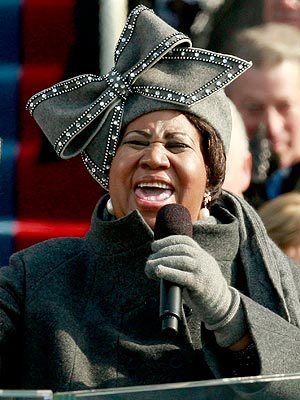
Franklin performed at President Bill Clinton's inauguration ceremony in 1993. Sixteen years later, Franklin - upon the request of the future occupant of the White House - sang "My Country 'Tis of Thee" at President Barack Obama's inauguration. The grey church hat that Franklin wore during the ceremonies was donated to the Smithsonian Institution.

The long-awaited album Aretha: A Woman Falling Out of Love will be released in May.

Franklin promises fans that she will attend next year's Grammy awards. We will hold you to that oath, Queen of Soul.

Tuesday, February 1, 2011

Joe Montana: Cool but not cool enough for GQ

February's issue of GQ identified the "25 Coolest Athletes of All Time" - icons "who played the game like it was an extension of who they were and taught us how to be big-time with grace, style and swagger." Some of the choices - Muhammad Ali, Arnold Palmer, Michael Jordan and Julius "Dr. J" Erving - seemed like gimmes. Editors selected five gridiron stars: Tom Brady, Jim Brown, Bo Jackson, Joe Willie Namath and Ken Stabler.

An dubious omission: former San Francisco 49ers quarterback Joe Montana. With Super Bowl XLV only days away, we make the case that GQ erred by omitting the other Joe Cool, Golden Joe Montana.

Don't let the movie-star looks or the ease with which he operated on the field fool you. During his collegiate and professional career, Montana repeatedly proved wrong critics who doubted his NFL worthiness.

Montana led Notre Dame to the 1977 National Collegiate Athletic Association (NCAA) title in a Cotton Bowl game in which the Irish trounced the heavily favored University of Texas 38-10 in what was essentially home game for the Longhorns. The following year, Montana - ill with the flu and taking intravenous fluids and chicken soup during the Cotton Bowl - and the Irish beat the University of Houston in the fabled "Chicken Soup game."

National Football League (NFL) scouts rated Montana in 1978 as above-average. The San Francisco 49ers selected Montana in the third round of the draft. The 49ers permitted journeyman quarterback Steve DeBerg take two seasons of beatings before permanently handing Montana the keys to the franchise in 1981. Montana sealed his place in post-season lore at Candlestick Park against the Dallas Cowboys with his off-balance touchdown pass to Dwight Clark. "The catch" sent the 49ers to their first Super Bowl game. Passing for one touchdown and running for another, Montana led the 49ers to Super Bowl victory over the Cincinnati Bengals. Three years later, Montana and the 49ers trounced Dan Marino and the Miami Dolphins 38-16 in Super Bowl XIX. Joe Cool captured his second Super Bowl MVP award.

In September 1986, Montana sustained a back injury and underwent a two-hour procedure to repair a herniated disc. Observing a narrowing in Montana's spinal column, surgeons recommended that he retire. Yet less two months after back surgery, Montana returned to the gridiron to replace injured 49er quarterback Mike Moroski in a contest with the St. Louis Cardinals at Candlestick. Launching a touchdown missile to wide receiver Jerry Rice, Montana "was jumped and crumpled by linebacker Charlie Baker," Sports Illustrated reported. 'Baker drew a personal foul for a late hit, but Montana brought back the breath of 59,172 spectators when he popped up clapping his hands." Montana later lay in the supine position after firing a subsequent 40-yard touchdown to Rice. After Montana returned to his feet, Cardinals defensive end Bubba Baker commented: "You're a helluva man."

Seeking an insurance policy at quarterback, the 49ers traded for Tampa Bay Buccaneer Steve Young the following year. Young played in eight games in 1987 and accrued a 120.8 passing rating. After Young appeared in 11 games, rumors swirled that the 49ers would deal away Montana. But Joe Cool cemented his starting role after leading San Francisco to the NFC playoffs in 1988. Throwing three touchdown passes against the Chicago Bears at Soldier field, Montana led the 49ers to Super Bowl XXIII. Cincinnati led San Francisco 16-13 with only 3:20 left on the game clock. The 49ers marched 92 yards down the field, and regained the lead with a Montana-to-John-Taylor touchdown with only 34 seconds left. Ever the cool operator, Montana reportedly spied comedian John Candy in the stands while maneuvering the club during the winning drive.


In 1990, Montana and the 49ers captured their fourth Super-Bowl triumph with a 55-10 pasting of John Elway and the Denver Broncos. Sports Illustrated rewarded Montana with its coveted "Sportsman of the Year" honors later that year.

Seeking the vaunted "three peat", the 49ers vied against the New York Giants during the hard-hitting 1991 NFC title game. The relentless Giants' defense hounded Montana and sacked the quarterback three times. The defining moment of the game occurred when Giants defensive end Leonard Marshall planted his helmet between Montana's shoulder blades. Suffering a bruised sternum and stomach, cracked ribs and a broken hand, Montana was replaced by heir apparent Steve Young. Montana missed the entire 1991 season with an elbow injury. When Montana returned to active-duty status in 1992, Young's success made Montana expendable. Seeing that their franchise quarterback no longer posed the same threat as he did three or four years earlier, the 49ers traded Montana and back-up Steve Bono to the Kansas City Chiefs.


Montana signed a three-year, $10 million contract with the Chiefs. Wearing the #19 jersey - the number that he donned in Little League - Montana took the Chiefs to the 1994 American Football Conference (AFC) game. The Chiefs fell to the perennial Super Bowl bridesmaids, the Buffalo Bills. In 1993, Montana defeated Young and the 49ers 24-17 during the second week of the season. The Montana-led Chiefs prevailed over Elway and the Broncos 31-28 during an AFC West contest aired on Monday Night Football. The Chiefs fell to Marino and the Dolphins during a wild-card game. Montana announced his retirement from professional football in 1995.

Sportswriters elected Montana to the Pro Football Hall of Fame in 2000.

It's hard to believe that GQ bypassed Montana in its list of the "25 coolest athletes of all time." The man won four Super Bowl rings - it isn't like he's a goofy rube like Terry Bradshaw. Montana's Joe Cool, for crying out loud. Brady, Brown and Namath are indisputable selections, so the dispute lies between Jackson and Stabler. Jackson played four NFL and four Major League Baseball (MLB) seasons; he was honored with selections to the NFL Pro Bowl and MLB All-Star game. Plus, Jackson starred in one of the most successful advertising campaigns of all time. Stabler won a Super Bowl with the Oakland Raiders, but he lacks the cool quality of Joe Cool.

Sorry, Snake. Regardless of what GQ says, Montana exceeds your cool quality.

Sunday, January 16, 2011

Timing is everything: cf Althea Gibson and Arthur Ashe

As the nation celebrates the federal holiday honoring the accomplishments of Rev. Dr. Martin Luther King Jr. consider the careers of African-American tennis greats Althea Gibson and Arthur Ashe. Chances are that the under-40 set may remember Ashe for his courage in battling the Acquired Immune Deficiency (AIDs) disease that he contracted while receiving a blood transfusion while undergoing heart surgery. Odds are that many don't recognize Ashe as a Wimbledon and U.S. Open champion. And betting money says that few in the under-50 set know the name Althea Gibson, much-less appreciate her tennis feats as a U.S. Open and Wimbledon champion.

Referenced as the "Jackie Robinson of tennis", Gibson (1927-2003) became the first African-American in 1956 to win a Grand-Slam title when she defeated Australian Angela Mortimer Barnett (6-0, 12-10) in the French Open. Gibson joined the United States Lawn Tennis Association (USLTA) only six years earlier. While Gibson dominated her opponents while competing in the American Tennis Association (ATA), an African-American tennis circuit, and attending Florida A&M College. Gibson became the first African-American athlete to play at Forrest Hills in New York and in Wimbledon.

From 1956 to 1958 Gibson was ranked amongst the Top 10 women tennis players. After capturing the Wimbledon single and doubles titles in 1957, New York City treated the athlete to a ticker-tape parade through downtown Manhattan. Gibson won the WImbledon and U.S. Open singles titles in 1958. At age 31, Gibson retired from amateur tennis and competed in the Ladies Professional Golf Association (LPGA). She appeared in The Horse Soldiers - 1959 Civil War film starring John Wayne and William Holden - and recorded an album called Althea Sings. Born two decades before professional women's tennis pioneer Billie Jean King, Gibson would see the riches that King, Chris Evert, Martina Navaratilova, Steffi Graf, Venus and Serena Williams. In the 1950s and 1960s, few female professional athletes would get rich off their athletic feats. The obstacles were greater for an African-American female professional athlete.


Ashe (1943-1993) received a tennis scholarship from the University of California at Los Angeles (UCLA) and was the first African-American chosen to represent the United States in the Davis Cup tournament. Ashe won the NCAA men's single title in 1965 and led UCLA to the team championship. He was commissioned as a Second Lieutenant with the Reserve Officers' Training Corps (ROTC), and served in the U.S. Army from 1966 to 1968.

In 1968, Ashe won the US Amateur Championships and the U.S. Open. He would earn two more Grand Slam titles winning the French Open in 1970 and Wimbledon in 1975 against a white-hot JImmy Connors.


Ashe would distinguish himself for advances he brought about in professional sports and civil rights. Concerned that professional tennis players weren't fairly compensated for their endeavors, Ashe formed the Association of Tennis Professionals (ATP). When South Africa denied him a visa so he could play in the South African Open, Ashe used the occasion to publicized the country's apartheid policies. Ashe spent $300,000 of his own funds to write and publish A Hard Road to Glory: A History of the African-American Athlete. The sports tome covered three periods (1619-1918, 1919-1945, 1946-present) of the saga of African-Americans in sport.

Take a moment this weekend to give due props to these pros.

Friday, December 31, 2010

Epitaph to a Great American Car

As the media pay final homages to noteworthy passings in 2010 - Tony Curtis, Lena Horne, Bud Greenspan, Don Van Vilet (Captain Beefheart) - one death went without the fanfare that it deserved: the end of production of the Pontiac automobiles by the General Motors Corporation (GM).

Pontiac Spring and Wagon Works produced their first automobiles- high-wheeled station wagons - in 1908. GM bought the company, and introduced the Pontiac brand of automobiles in 1926. One year later, Pontiac ranked amongst the top-selling automobiles in America. As a nod to Chief Pontiac, the Native American leader who fought against British military occupation in the 18th century, the division renamed its 1940s models the Chieftain and Star Chief.

In 1958, Pontiac general manager Semon "Bunkie" Knudsen and his design gurus - E.M. Estes and John Z. DeLorean (the guy who headed the company that produced the cars used in the Back to the Future series) - retooled the division and launched a limited-edition, fuel-injected engine in its Star Chief Bonneville. Scribes dubbed the Bonneville - the pace car for the 1958 Indianapolis 500 - "America's No. 1 road car."

Pontiac introduced new design changes to the 1959 models: wide-track styling, longer and lower bodies, larger areas of glass, Quad headlights, twin V-shape fins, and the iconic "V" emblem. Motor Trend magazine selected the Pontiac as its 1959 Car of the Year.

In 1961, the Tempest - Pontiac's compact model - received kudos as Motor Trend's Car of the Year.


Continuing to push the creative envelope, Pontiac introduced the Gran Turismo Omologato (Italian for "Grand Touring, Homologated"), aka, GTO in 1964. Like the division's Grand Prix, which debuted three years earlier, the GTO - dubbed as the first American muscle car - celebrated the Pontiac's sporty bucket-seat sport coupes. For a few extra bucks, consumers could purchase a GTO option that sported a 381-ci engine, which was larger than that of the high-performance Chevrolet Corvette. Motor Trend named the Pontiac division as its 1965 Car of the Year.

The surf group Ronnie and the Daytonas recorded the single "GTO", which was released in 1964. The pop tune reached the No. 4 spot on Billboard magazine's pop singles chart. Pontiac couldn't buy the publicity of a hit single that played on rock 'n roll stations throughout the country - back before Top-40 music became so fractured and specialized. Imagine a two-minute advertisement that played constantly on AM radio throughout the country.

Wind it up, blow it out, GTO.

Pontiac introduced the Firebird pony car in 1967 as the GM alternative to the white-hot popular Ford Mustang.

When the James Garner series, The Rockford Files, premiered in September 1974, Pontiac enjoyed the publicity that came when Los Angeles private detective Jim Rockford tooled around Southern California in a gold Firebird. Who wouldn't want to use the Pacific Coast and Ventura highways as one's personal racetracks?


GM enjoyed the luxury of a wildly popular division in the 1960s and 70s. So what happened in the intervening 30 years to drive the Pontiac brand from enormous brand-name popularity to discontinued division?

In his tome American Cars, 1960-1982, J. "Kelly" Flory Jr. attributes Pontiac's slow decline and ultimate death to rising gasoline prices, increased insurance costs, federal safety and emissions regulations. The author also notes Pontiac's failed attempts to build plush and luxurious automobiles along the lines of the GM Oldsmobile (which was discontinued) and Buick (which surprisingly remains in production). Others point their fingers at the hiring of general manager Martin J. Caseiro, who emphasized sales and marketing than car performance. This change in focus represented a dramatic departure from that of Knudsen and DeLorean, who sought to highly coveted, high-performance vehicles.

Perhaps the Pontiac's demise should also lie at the hands of GM executives, who focused on pickup trucks and sport utility vehicles, which generally were manufactured at lower costs and sold for higher profit margins that sedans.

The blame-game, though, is meaningless because the Motor City stuck a fork in Pontiac, and the once-great division isn't coming back to life.

Thursday, December 30, 2010

In the mid-1960s, it was hip to be a square, outpowering southpaw

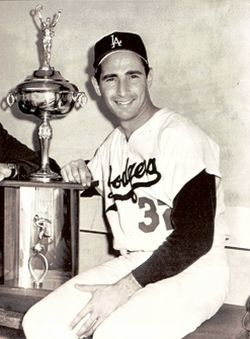
Happy 75th birthday to Hall of Fame (HOF) southpaw Sandy Koufax.

Few will argue that New York Yankee shortstop Derek Jeter is the straw that stirs the Manhattan - really, Bronx - baseball cocktail. The iconic Yankee captain lives the picture-perfect life for which some men would give their right arms: drop-dead gorgeous eligible bachelor, 2,926 career hits, five World Series rings, a trail of actress/model girlfriends (Minka Kelly, Jessica Biel, Jessica Alba, Joy Enriquez, Mariah Carey). A-Rod without the personal and professional package.

Forty-five years earlier and one coast away, Koufax (aka, The Left Arm of God) led the dream life in Los Angeles that Jeter now enjoys in Manhattan. Handsome, stylish and at the top of his game, Koufax was considered one of the most eligible bachelors in a town full of movie stars.

At age 29, Koufax amassed an impressive collection of Major League Baseball (MLB) bric-a-brac while pitching for the Brooklyn/Los Angeles Dodgers: four World Series rings; two Cy Young Awards as MLB's top pitcher of the year (1963 and 1965, back when sportswriters selected one hurler amongst the National and American leagues); 1963 NL Most Valuable Player (MVP) plaque; and two Chevrolet Corvettes presented to Koufax as the 1963 and 1965 World Series MVP (back when Sport magazine - remember them? - honored Series MVPs with kick-ass sports cars).

At age 29, Koufax distinguished himself as the most dominating left-hander in baseball. From 1961 to 1965, Koufax amassed an astonishing record of 102-38 (.729 winning percentage), 2.31 ERA and 1,396 strikeouts. Koufax hurled four no-hitters, including one perfect game.


In 1964, doctors diagnosed Koufax with traumatic arthritis after the pitcher was unable to straighten out his left arm pitching a 13-strikeout game. One year later, Koufax experienced hemorrhaging that turned his invaluable arm black and blue. The Dodgers team physician warned Koufax that he would someday lose full use of his left arm. According to the 1966 autobiography Koufax, the All-Star pitcher subjected himself to a treatment regimen that included Empirin with codeine for pain, Butazolidin for inflammation, application of the capsaicin-based analgesic ointment (referenced as "atomic balm" by baseball players) and a post-game ice bath. (Mark McGwire attempted to justify his use of performance-enhancement drugs as a means to treat the numerous - and inevitable - nagging injuries that he experienced over the course of his career. Compare and contrast: stoic hero and whiner who resorts to rationalizations.)

Tailors altered Koufax's his suits altered to compensate for the permanent shortening of the left arm.

Koufax made headlines when he declined to pitch in the first game of the 1965 World series. Game One fell on Yom Kippur, the holiest of all Jewish holidays. Koufax did not resort to grandstanding tactics to express his devotion to his religion.


Koufax would pitch only one more amazing season in which he would compile a 27-9 record (.750), yield only 62 earned runs in 323 innings (1.73 ERA) and strike out 317 batters. Game Two of the 1966 World Series pitted Koufax against the Baltimore Orioles' promising right hander named Jim Palmer. Leaving the sixth inning after center fielder Willie Davis uncharacteristically committed three errors, Koufax lost the game to Palmer, who threw a four-hit shutout. After Baltimore swept the Dodgers, Koufax announced his retirement.

In an abbreviated 12-year career, Koufax's career statistics (165-87, 2,396 strikeouts, 2.76 ERA) provide interesting contrasts with those of southpaw Steve Carlton (329-244, 4,136 strikeouts, 3.22 ERA) and Randy Johnson (303-166, 4,875 strikeouts, 3.29 ERA). Koufax stands apart for his New Frontier cool that would enable him to fit in on the Mad Men set.

We should all be as cool.

Saturday, December 25, 2010

Celebrate Christmas with holiday music from one cool cat

Christmas time is here... and you likely have grown weary of Andy Williams and Johnny Williams telling you "it's the most wonderful time of the year" two weeks ago. Why on earth do radio broadcast executives - programmers ruled by the bottom line than viewer interest - pump the airwaves with holiday ditties from Thanksgiving forward? You can't help but experience holiday music fatigue by the start of Hanukkah.

If WARM radio's blitz of yuletide tunes leaves you cold, you will find solace in nontraditional but iconic holiday music of one of the coolest cats in jazz, pianist and composer Vince Guaraldi.

A self-described "reformed boogie-woogie player," the San Francisco native - working at the San Francisco Daily News - nearly lost a finger to an occupational accident. The San Francisco State University (SFSU) alum performed at weddings, high-school concerts and Bay Area clubs while seeking the Big Break to which hungry musicians aspire. In the late 1950s, Guaraldi began incorporating American cool jazz (a staple of 1950s music) and Brazilian bossa nova compositions (which would experience unprecedented popularity in the 1960s) in his compositions. Blame it on the bossa nova: A star would emerge.

In 1962, the Vince Guaraldi Trio's 1962 limited play (LP) album Jazz Impressions of Black Orpheus. The LP comprised music from songs from the Brazilian film released in three years earlier ("Samba de Orpheus", "Manha de Carnaval", "Generique") a contemporary favorite ("Moon River") and a songbook standard "Since I Fell For You"). "Cast Your Fate to the Wind", though, became a breakout hit and propelled the trio to stardom and captured the Grammy award for Best Original Jazz Composition.


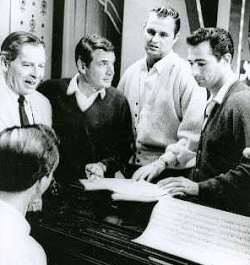
Guaraldi's popularity caught the attention of a trio of men producing an animated holiday program in 1965. Lee Mendelson, Bill Menendez and Charles M. Schulz made up the group of three wise men. Their passion project involved a Christmas special featuring the characters of the white-hot Peanuts comic strip. We know the special as A Charlie Brown Christmas. Schulz, Mendelson and Menendez resisted the implorations of executives from the Columbia Broadcasting System (CBS) to deep-six the original jazz compositions that would serve as the program's soundtrack. Nobody could foresee that "Linus and Lucy" - a staple of all future Peanuts TV shows - would resonate with an American television audience that favored episodes of The Fugitive (#5), The Andy Griffith Show (#4), Gomer Pyle, USMC (#3), Bewitched (#2) and Bonanza (#1) during the 1964-1965 television season.

How big significant was Guaraldi's trailblazing endeavors to the beloved Peanuts holiday special? Producer Mendelson once told a reporter: "I think Vince's music was one of the contributions that made the Charlie Brown shows so special." Guaraldi, Mendelson explained, "gave it a sound, an individuality, that no other cartoon ever had. I'd say over the last 15 years we've received as much mail asking about the music as we have about anything else in the shows."


If Jazz Impressions of Black Orpheus and "Cast Your Fate to the Wind" didn't make Guaraldi a household name, A Charlie Brown Christmas propelled the beatnik musician into the American mainstream. Billboard writer Shirley Lewis Harris later lauded Guaraldi as "still playing the same jazz as he did years ago, but with more guts than ever. This man can turn a piano into the closet thing a human being just putting his hands on the keys. He makes the piano laugh, cry, sigh, be coy or intellectual."

Critical respect, though, didn't provide Guaraldi the commercial and financial success that he deserved. Guaraldi returned to the Bay Area club scene. In February 1976 - a little more than a decade after A Charlie Brown Christmas premiered - Guaraldi suffered a fatal heart attack. Only 47 years old, he died while playing between sets during a gig at Butterfield's Bar in Menlo Park, CA.

Despite the explosion of video clips available on YouTube, you won't find a live performance of the Vince Guaraldi Trio. Any individual with access to a tape of a live Guaraldi performance is implored to post on YouTube. We want to see the man playing his groundbreaking music.

Wednesday, December 8, 2010

The music was silenced 30 years ago today

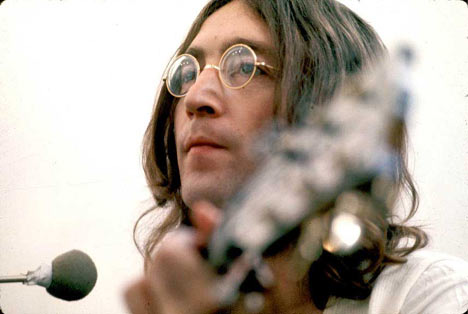
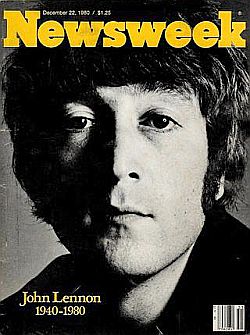
Imagine if a different outcome occurring in front of The Dakota in New York City on December 8, 1980.

What if John Lennon were less accommodating to his fans who regularly waited outside and obtained autographs at the entrance of The Dakota? Would life be different if somebody observed the fat, delusional psychotic -- obsessed with assassinating the former Beatle -- who stalked the building hours after securing the singer's autograph on a couple of Double Fantasy, the last album that Lennon would record?

Try to envision a world in which Lennon lived to see December 9, 1980... and beyond.

Three days ago, the Kennedy Center of the Performing Arts feted Paul McCartney during a ceremony that celebrated the careers of "five extraordinary artists." Singer Merle Haggard. Broadway composer Jerry Herman. Choreographer Bill T. Jones. McCartney. Television producer Oprah Winfrey. If he had lived, 70 year-old John Ono Lennon -- nee John Winston Lennon -- would have made the group six.

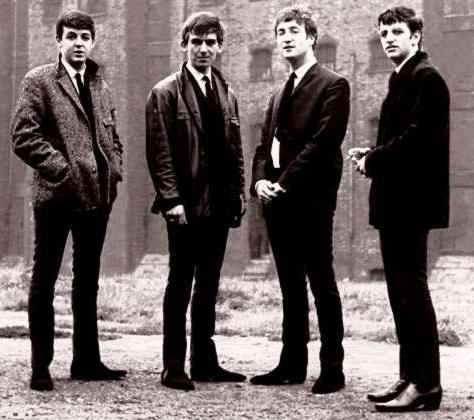
Critics will celebrate Lennon's musical career that spanned from a LIverpool ruffian singing "Ain't She Sweet" in working-class cavern, mop-top teen idol donned in collar-less Pierre Cardin suit, drug-fueled solo artist champion of working-class heroes and "Mr. Mom" singer contented with staying at home with his young son. Sociologists will pontificate about Lennon's personification as a rock star "bigger than Jesus", anti-war and peace activist, target of the ire of former President Richard M. Nixon.


Lennon's anti-war protests got him caught in Tricky Dick's cross hairs. The former Beatle and wife Yoko Ono kept company in the early 1970s with Chicago Seven defendants Jerry Rubin and Abby Hoffman, poet John Sinclair, and Black Panther co-founder Bobby Seale. Lennon and Ono co-hosted The Mike Douglas Show in February 1972. Their special guests included a group as diverse as Rubin, Seale and singer Chuck Berry, consumer advocate Ralph Nader, musicians The Chambers Brothers and comedian Louis Nye. Needless to say that occupants of the green room that week did not resemble Douglas' usual roster of visiting guests. Nixon took the sage advice of South Carolina Republican Senator Strom Thurmond. An extremist for the political right, Thurmond penned a memo in February 1972 that advised that "deportation would be a strategic counter-measure" against the former Beatle.


One month later, the United States Immigration and Naturalization Service (INS) commenced deportation proceedings based, in part, on Lennon's 1968 conviction in Great Britain for possession of marijuana. While Ono was granted permanent residency in 1973; on March 23, 1973 the INS gave Lennon 60 days notice to leave the country. Soon, though, larger political issues -- resignation of Vice President Spiro Agnew, Watergate hearings, economic inflation and Nixon's impending departure from the White House -- occupied the President's time. The INS' deportation order was overturned in 1975. Lennon's application for permanent residency was granted a year later.

Lennon became a house husband in 1975 after the birth of his son Sean. While McCartney and his wife Linda Eastman -- never blamed as a spousal source of the group's breakup -- crooned "silly love songs", George Harrison established his own recording (Dark Horse Records) and movie-production (HandMade Films) companies, and Ringo Starr toured with an All-Star band, Lennon changed diapers. In 1980, he and Ono returned to the studio to record what would become his last album, Double Fantasy.

In an Associated Press (AP) interview, widow Yoko Ono offered her impression of Lennon at age 70. She suggested that Lennon would initially have become angry at the idea of reaching his eighth decade. The "smart Beatle" resented turning 40 in 1980 -- a time when people considered 40 as "old". Ono said that if her husband lived to see 70, he would have accepted his what some still characterize as "old age."


A psychopath attempting to impress a Yale coed took Lennon away from us much too soon. More than a few of us would have loved to know Lennon's opinions on Reagonomics, yuppies, reunification of East and West Germany, fall of the Soviet Union, untimely death of Princess Diana, weapons of mass destruction, "war on terror", Napster, YouTube, iTunes and the election of President Barrack Obama.

All we can do is imagine.